AI-Aware Coding Interviews in 2026: How to Prepare and Thrive
Tech interviews are no longer testing raw coding—they're testing your ability to work with AI. Learn the format shift, what interviewers are grading, and how to prepare for live AI-assisted rounds at Google, Meta, and beyond.
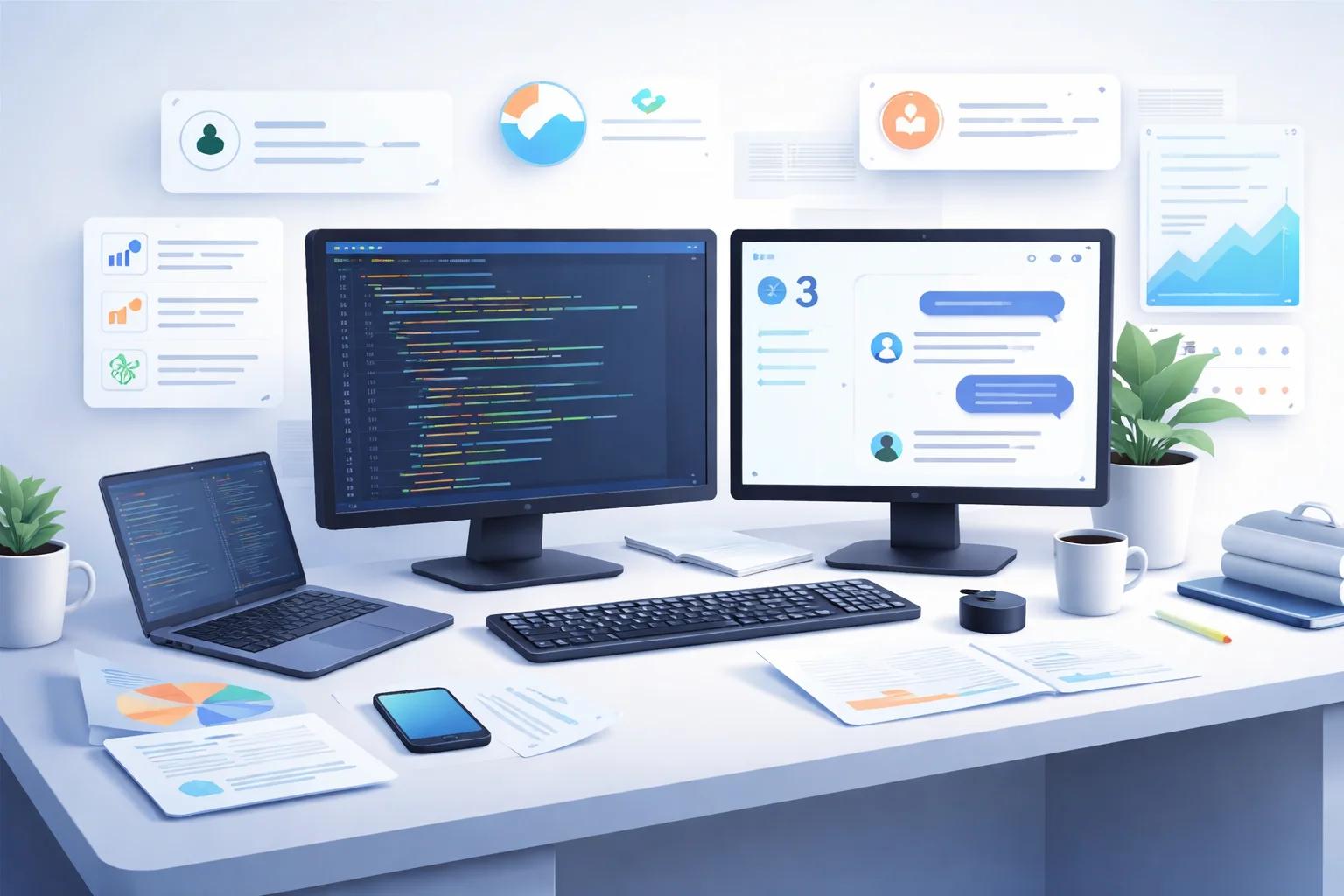
The Interview Landscape Has Fundamentally Shifted
Companies are shifting toward live coding sessions where interviewers can watch candidates think and debug in real time. This isn't just an incremental change—it's a complete reimagining of what technical interviews measure.
Live interviews are now more valuable than automated tests and take-home projects because they allow interviewers to observe how candidates work through problems, make decisions, and use AI tools. The backlash against multi-hour unpaid take-homes is real, and hiring teams have listened.
What "AI-Aware" Interviews Actually Look Like
In AI-aware interviews, interviewers observe how you work with AI instead of pretending it does not exist. This is the core shift: AI is no longer hidden or prohibited. It's part of the evaluation.
Google is piloting a new interview format that allows software engineering candidates to use an approved AI assistant during the coding round, with candidates using the company's own Gemini model. Meta started rolling out AI-enabled coding interviews in late 2025.
The environment typically includes a multi-file codebase in a shared editor, an AI chat window where you can ask for help, and an interviewer watching your every move. The AI can answer questions but won't directly edit your code.
What Interviewers Are Actually Grading
This is crucial: The skills that separate candidates now are the ones AI can't provide: knowing what to build, explaining why, and catching what the AI gets wrong.
Interviewers will evaluate "AI fluency, including prompt engineering, output validation, and debugging skills." Specifically:
- Prompt engineering: Can you ask the AI the right question in the right way?
- Code validation: Can you spot when AI-generated code is wrong, inefficient, or unmaintainable?
- Communication: Interviewers need to hear how you arrived at a solution—long periods of silence make it hard to assess your judgment.
- Accountability: Candidates who appeared to "rely heavily on AI" without demonstrating their own understanding have received negative feedback.
The Real Preparation Strategy
Most coding interview prep involves writing code from scratch, but now you also need to practice reading and understanding unfamiliar code quickly. This is the practice most candidates skip and shouldn't.
Focus on three areas:
- Code reading, not just code writing: Spend time understanding existing codebases, spotting bugs, and optimizing unfamiliar logic.
- Debugging fundamentals: The format is predictable and levels the playing field for candidates who interview less frequently. Practice tracing through code systematically.
- Talking through AI decisions: Practice explaining your prompts, what you expect the AI to return, and how you'll validate the output. Silence during an AI-assisted round is a red flag.
Critical Pitfalls to Avoid
AI-generated solutions often optimize for functionality over readability, and if you accept verbose or unclear code just because it works, you miss part of what the interviewer is measuring.
Also remember: AI-aware interviews have not removed the need for computer science fundamentals. You still need to understand time and space complexity, trade-offs, and architectural decisions.
Salary Negotiation After You Pass
Once you've aced the technical interview, don't leave money on the table. Only 30% of workers ask for higher pay, yet job seekers who countered an offer in a study of nearly 3,858 tech candidates won an average raise of 12.45 percent, roughly 27000 dollars a year.
By 2026, most professionals in the U.S. are advised to counter with 10–20% above the initial offer if it falls short of market benchmarks. Use data from Levels.fyi, which is especially useful for tech, product, and data roles.
The four highest-leverage moves: anchor first with market data, counter on total comp (not base only), get a written offer before negotiating, never disclose current pay.
The Bottom Line
AI hasn't made coding interviews easier—it's made them smarter. You're no longer being evaluated on whether you can write code from a blank screen. You're being evaluated on judgment, communication, and your ability to work effectively in a world where AI is the norm. Prepare accordingly.